
Deep Breathing Exercises for Anxiety:
A Complete Guide
Anxiety has become one of the defining challenges of modern life. Nearly 1 in 5 adults in the U.S. live with an anxiety disorder, and countless more experience daily stress that disrupts focus, sleep, and peace of mind. One of the simplest, most effective tools available to manage these challenges is deep breathing exercises for anxiety. Unlike medication or complex therapy, breathing practices are free, accessible, and always available.
When you slow your breathing, you directly influence the nervous system. The body shifts out of fight-or-flight mode and into a calmer, more balanced state. This is why deep breathing has been used for centuries in yoga, meditation, and relaxation therapies and why modern science now confirms its benefits.
Understanding Deep Breathing Therapy
Deep breathing exercises are structured breathing techniques designed to calm the body and quiet the mind. They encourage you to move away from shallow, rapid chest breathing and instead use the diaphragm to take full, slow breaths.
The goal is not simply to “breathe more deeply,” but to retrain your nervous system to recognize safety. With practice, deep breathing becomes a reliable anchor in moments of stress, providing both immediate relief and long-term resilience.
How Deep Breathing Reduces Anxiety
The Science of Breath and the Nervous System
When you’re anxious, breathing naturally becomes quick and shallow. This reinforces the stress response: the heart beats faster, blood pressure rises, and muscles tense. Deep breathing flips that switch by engaging the parasympathetic nervous system (rest and digest).
Key effects include:
- Reduced stress hormones like cortisol and adrenaline.
- Lower heart rate and blood pressure, easing physical tension.
- Balanced oxygen and carbon dioxide, preventing dizziness and agitation.
- Improved clarity, as more oxygen reaches the brain.
- Present-moment grounding, which quiets racing thoughts.
Anxiety in Today’s World
Statistics show the urgency of simple, effective tools like breathing:
- 42.5 million U.S. adults (19.1%) experience anxiety disorder each year.
- Women (23.4%) are more affected than men (14.3%).
- Among teens (13–18), 31.9% struggle with anxiety, with rates especially high in girls.
- Only 43.2% of adults with generalized anxiety disorder receive treatment.
Economic uncertainty, social media, rising healthcare costs, and the lingering effects of the COVID-19 pandemic have all contributed to higher stress levels. Between 2019 and 2020, reports of anxiety and depression symptoms jumped from 11% to 40%.
Against this backdrop, the value of deep breathing becomes clear. Time and time again, it is a proven way to interrupt the spiral of stress and regain balance.
Feeling anxious or overwhelmed?
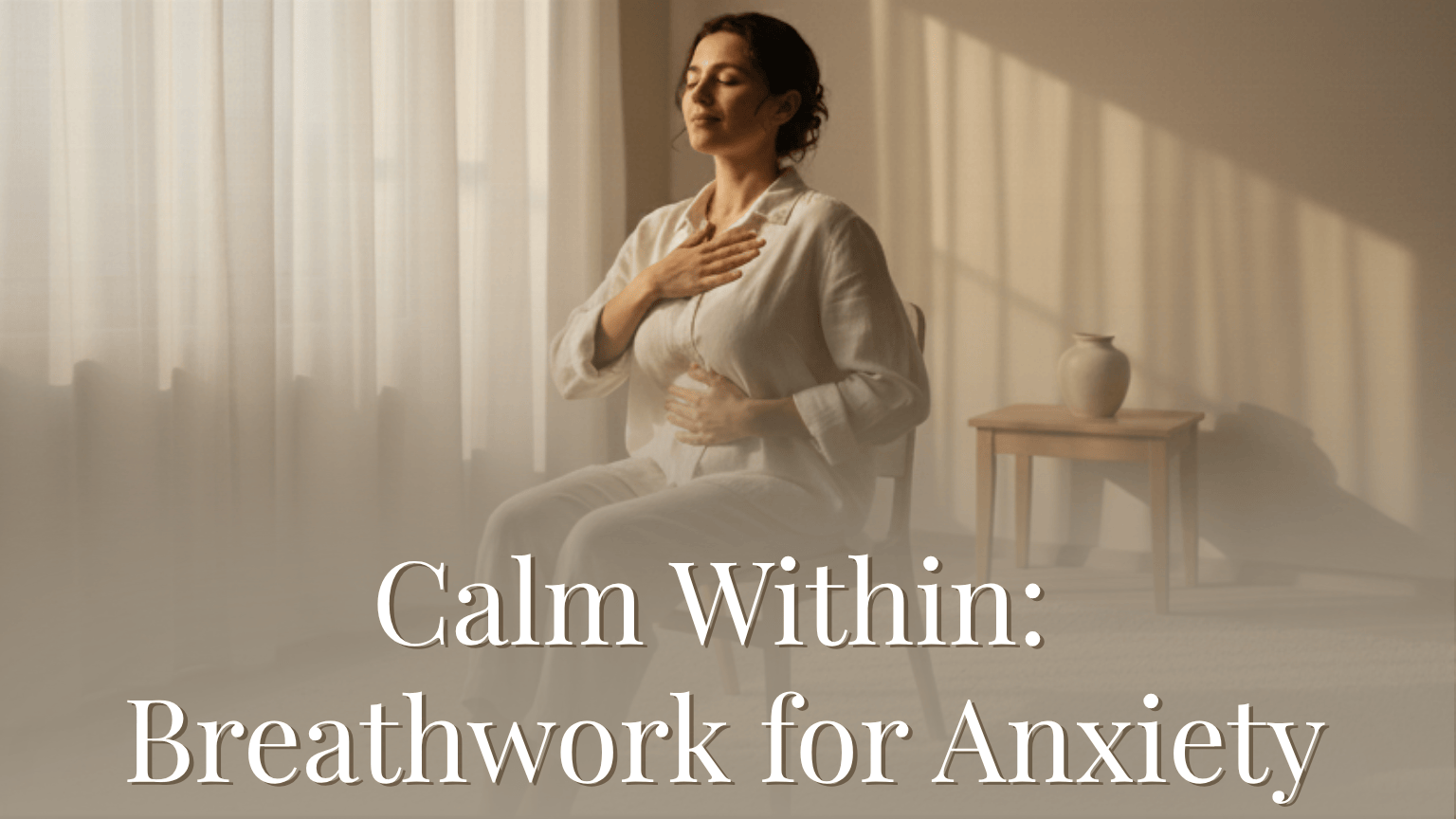
Find peace with 👉 Calm Within: Deep Breathing Exercises for Anxiety.
A simple 4-video program that teaches you how to use your breath to ease anxiety and find calm anytime, anywhere.
Different Types of Deep Breathing Techniques
Diaphragmatic (Belly) Breathing
This foundational exercise trains the diaphragm, the muscle designed for healthy breathing.
How to do it:
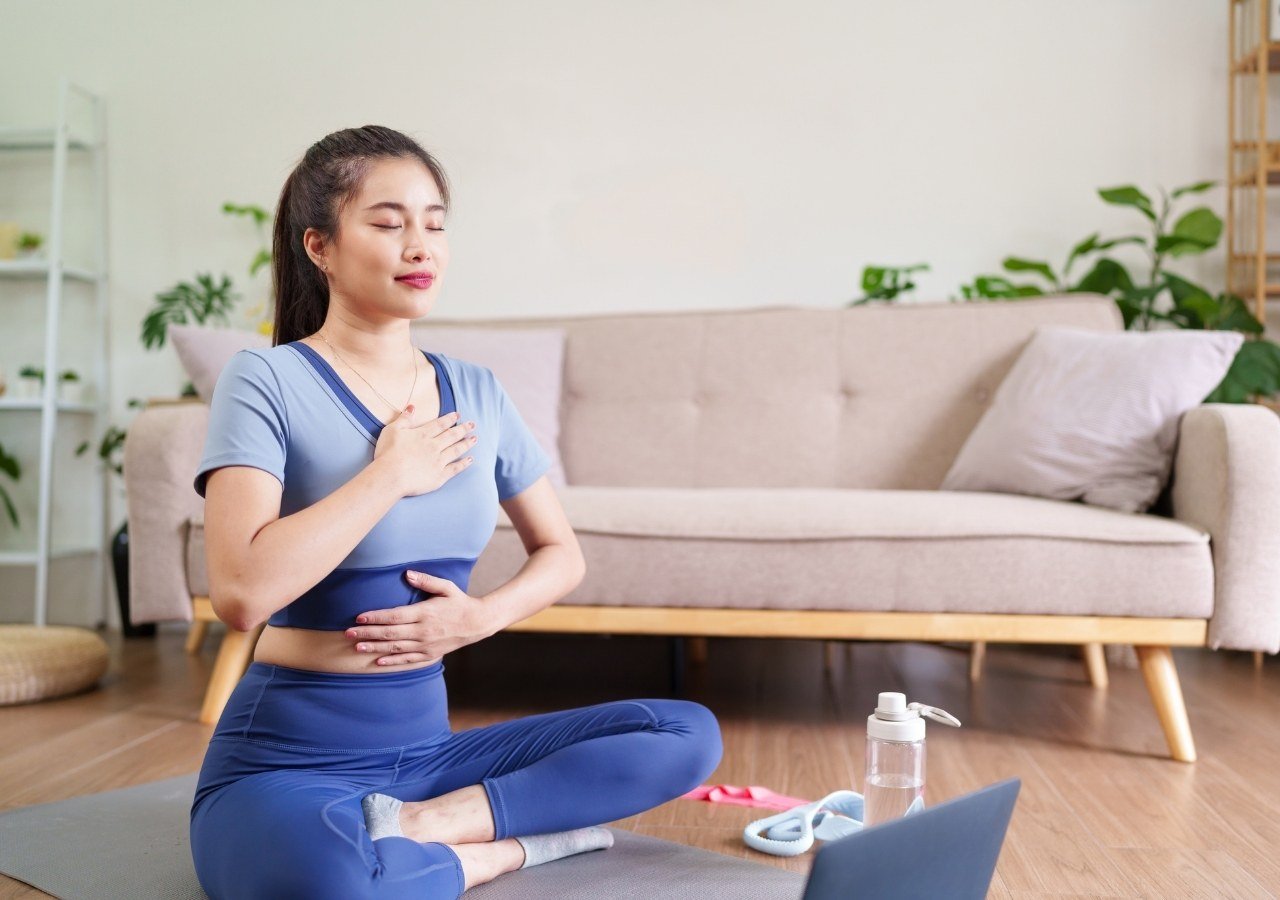
- Sit or lie comfortably.
- Place one hand on your chest and one on your belly.
- Inhale through your nose, letting the belly rise while the chest stays still.
- Exhale slowly through the mouth or nose.
- Repeat for 2–5 minutes.
Why it works: It retrains the body to breathe fully, reducing shallow chest breathing that fuels anxiety.
How belly breathing benefits your body
Extended Exhale Breathing
Longer exhales send a direct signal to the body to calm down.
How to do it:
- Inhale through the nose for a count of 4.
- Exhale through the nose for a count of 8.
- Repeat for several rounds, keeping the breath smooth.
Why it works: Extended exhalation activates the vagus nerve, which regulates relaxation.
Box Breathing
Also called “square breathing,” this technique is used by yogis, athletes, military personnel, and high-stress professionals.
How to do it:
- Inhale through the nose for 4 counts.
- Hold in for 4 counts.
- Exhale for 4 counts.
- Hold out for 4 counts.
- Repeat for 4–6 rounds.
Why it works: The steady rhythm balances oxygen and calms both body and mind.
Alternate Nostril Breathing
A yoga-based practice that balances the hemispheres of the brain and calms the nervous system.
How to do it:
- Use your right thumb to close your right nostril. Inhale through the left nostril.
- Close the left nostril with your ring finger and exhale through the right nostril.
- Inhale through the right, then close it and exhale through the left.
- Continue alternating for 1–3 minutes.
Why it works: Creates balance in both the mind and nervous system.
For a deeper dive into Pranayama, check out: How to Do Nadi Shodhana
Moon Piercing Breath
Traditionally practiced for cooling and calming.
How to do it:
- Inhale only through the left nostril.
- Exhale only through the right nostril.
- Continue for 10–15 breaths.
Why it works: This technique soothes restlessness and prepares the body for rest or sleep.
When to Use Deep Breathing for Anxiety
Deep breathing can be used in many everyday situations:
- Everyday: First thing in the morning and before bedtime.
- During a panic attack: To break the cycle of rapid breathing and regain control.
- Before stressful events: Presentations, exams, or interviews.
- In daily routines: Morning practice, short breaks, or before meals.
Regular practice builds a foundation. Over time, your body learns to shift into calm more quickly and reliably.
Causes and Risk Factors of Anxiety
While anxiety has many roots, nearly all forms share one thing: disrupted breathing patterns.
Factors contributing to high anxiety rates in America include:
- Economic stress: Job insecurity, student debt, and healthcare costs.
- Social media pressure: Constant comparison and information overload.
- Trauma and ACEs (Adverse Childhood Experiences): Strong predictors of anxiety later in life.
Common Agitators That Make Anxiety Worse
Breathing exercises are powerful, but they work best when paired with awareness of what might be fueling your anxiety. Some everyday habits and substances can make symptoms worse:
- Caffeine: Stimulates the nervous system, raising heart rate and mimicking anxiety symptoms.
- Alcohol: Initially calming, but disrupts sleep and increases anxiety once its effects wear off.
- Processed sugar: Causes blood sugar spikes and crashes, which can trigger mood swings and anxious feelings.
- Nicotine: Acts as a stimulant, increasing tension and interfering with natural relaxation.
- Lack of sleep: Sleep deprivation heightens stress hormones and reduces resilience to daily stressors.
- Sedentary lifestyle: Physical inactivity contributes to poor circulation, low energy, and increased stress.
- Excess screen time: Constant alerts, social media comparisons, and blue light exposure disrupt focus and sleep.
- Poor hydration: Even mild dehydration can affect mood, focus, and energy, increasing feelings of irritability.
- Irregular meals: Skipping meals or eating too infrequently can lead to low blood sugar, a common trigger for anxiety.
- Chronic stress exposure: Overwork, financial stress, or toxic environments keep the body stuck in fight-or-flight.
Being mindful of these factors and reducing them where possible, makes deep breathing and other calming techniques even more effective.
Learn with Guidance → Your Next Step
Breathing alone can be powerful, but guided practice helps you stay consistent and deepen the benefits. That’s why I created a step-by-step program:
👉 Deep Breathing Exercises for Anxiety: The Complete Course
In the course, you’ll get:
- Clear video demonstrations of each exercise.
- Structured daily routines for stress relief.
- Specialized techniques for sleep, panic relief, and long-term resilience.
- Support in building a habit that lasts.
You don’t have to rely on guesswork. With the right guidance, deep breathing can become one of the most reliable tools for calming anxiety and reclaiming balance.