
Yoga Cueing Made Simple:
A Step-by-Step Guide for Trainees
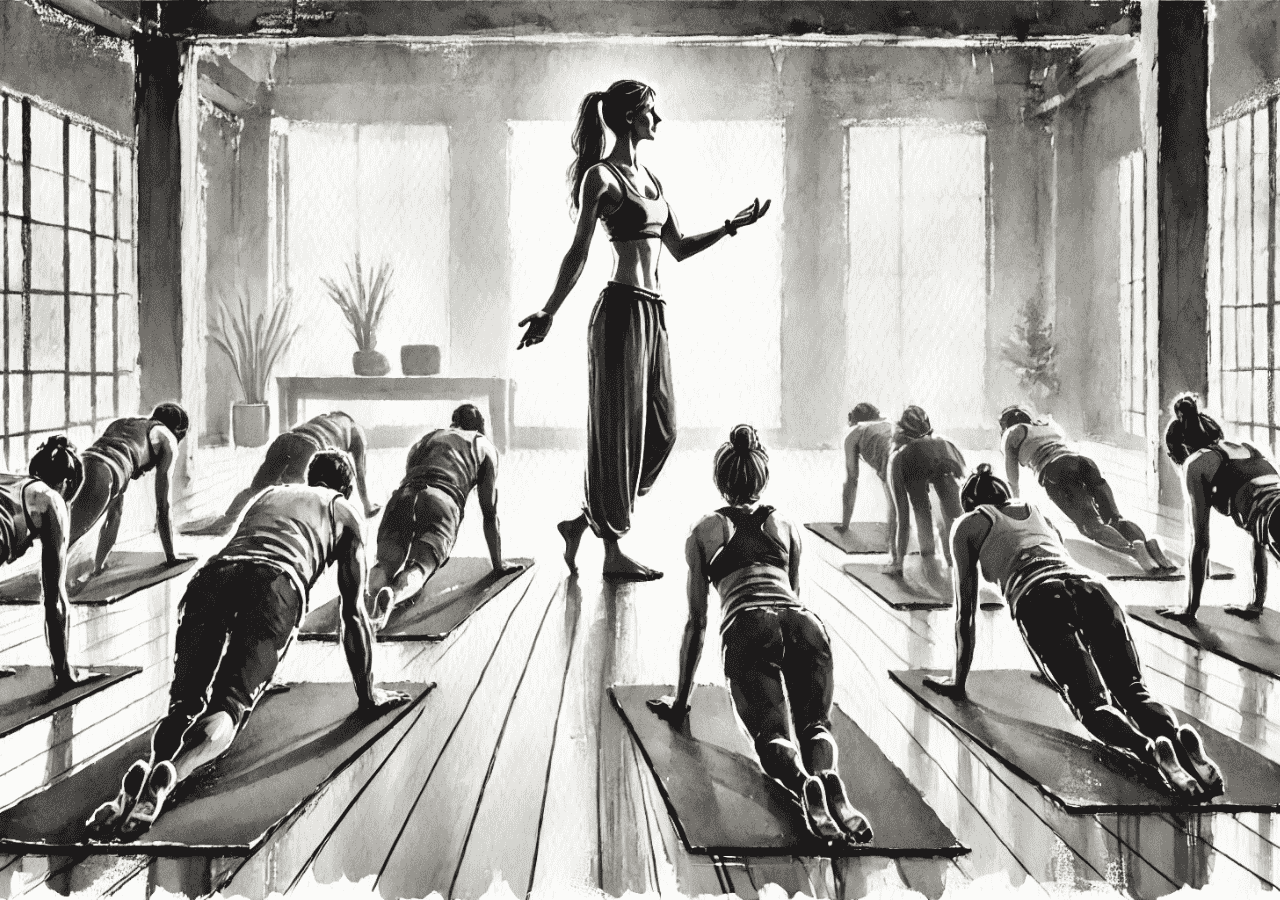
Did you know most yoga teacher trainees say yoga cueing is the hardest part of learning to teach? Many worry about forgetting details, overwhelming students with too many words, or sounding unsure in front of the class.
The good news: yoga cueing doesn’t have to be complicated. With a simple system and some practice strategies, you can build confidence in your voice and guide students with ease.
This guide breaks down how to practice yoga cueing step by step, so you can grow from hesitant trainee to clear, confident teacher.
What is yoga cueing and why do trainees struggle with it?
Yoga cueing means guiding students through postures with short, effective instructions. It usually includes:
- Which breath to use (inhale or exhale)
- The name of the posture
- A few simple alignment points
Trainees often struggle because:
- They try to remember every alignment and anatomy note at once
- They speak too fast, adding too much detail
- They worry their words sound too basic or scripted
Once you simplify the process, the pressure eases.
What’s the simplest cueing formula for new teachers?
Breath + Posture + Three Cues (ground up).
- Breath: Pair the movement with inhale or exhale.
- Posture: Call out the asana name.
- Three cues: Choose the most important alignment points, starting from the ground.
Example: Upward Dog → Downward Dog
“exhale, Downward Dog, press up and back, feet hip-width apart, spread your fingers.”
That’s it! Clear, simple, and easy to follow.
Then, when your students are in the posture, you can add more cues and modifications based on what you see.
How can you practice cueing outside the classroom?
Practice is what turns cueing from awkward to natural. Try these methods:
- Cue yourself in practice. Talk through each pose as you move.
- Record your voice. Play it back to hear what works and what feels cluttered.
- Teach a friend. Even guiding one person builds confidence.
- Use index cards. Write the posture, breath, and three cues to rehearse.
The more you repeat, the more fluent and authentic your cueing becomes.
Check out The Essential Guide to Yoga Teacher Training
How do you keep from overwhelming students?
New teachers often overload classes with rapid-fire instructions. To avoid this:
- Stick to three cues at first
- Speak slowly and give students time to move
- Leave space for silence — not every moment needs words
- Add refinements later once the basics are set
Remember: less is more.

How can you make your cueing sound confident?
Confidence in cueing comes from clarity, not complexity. To sound professional:
- Project your voice instead of trailing off
- Avoid filler words like “maybe” “um” “go ahead and” or “kind of”
- Stand tall and cue from a stable posture yourself
- Breath with the students — when you say inhale, you inhale too
Confidence isn’t about sounding like someone else. It’s about delivering cues that are simple and clear in your own voice.
FAQ
Do I have to memorize every posture script?
No. Use scripts for practice, but adapt them to what students actually need.
What if I forget a cue mid-class?
Just keep moving. Students don’t notice nearly as much as you think.
How do I improve faster?
Practice daily in small chunks: cue yourself, record your voice, and refine one posture at a time.
Build your cueing skills step by step
Cueing is one of the most important skills you’ll develop as a yoga teacher, and it gets easier with practice. Use the Posture + Breath + Three Cues method to simplify your instructions, then refine through repetition and feedback.
Every great teacher started as a trainee who felt unsure and with steady practice, you’ll soon cue with confidence and clarity.