
Yoga and Cultural Appropriation
Are we truly honoring the roots of this ancient practice?
What Is Cultural Appropriation in Yoga?
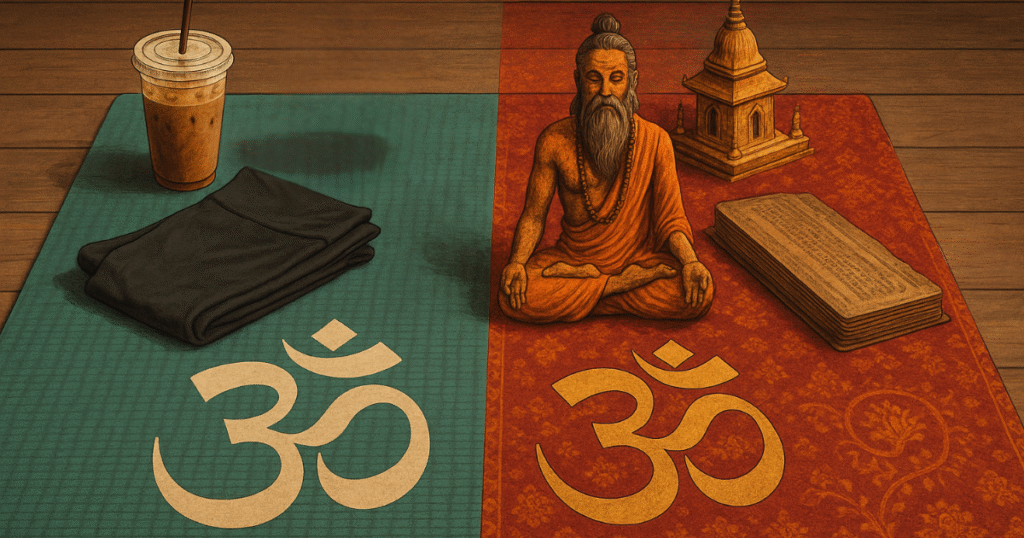
Cultural appropriation in yoga is when sacred elements of the practice like language, symbolism, and philosophy are used without honoring their roots, discounting the true essence and origin as well as the proper practices of yoga. It often happens unconsciously. But intent doesn’t erase impact. Appreciation seeks to understand. Appropriation skips the depth, sells the surface, and redefines yoga to suit personal preferences. This isn’t about guilt or cancel culture. It’s about bringing awareness.
Disclosure: This post contains affiliate links. If you click and make a purchase, I may earn a small commission at no extra cost to you. As an Amazon Associate, I earn from qualifying purchases.
How It Shows Up in Western Yoga
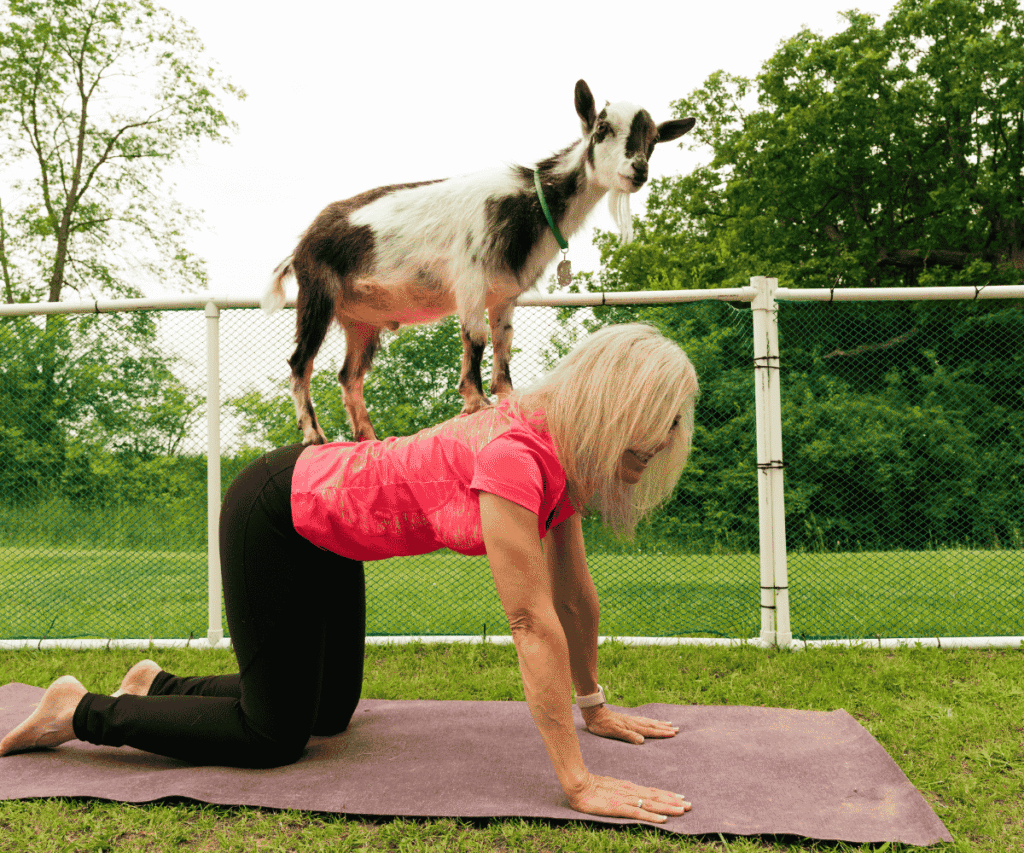
Yoga in the west often seems to be more of a brand than a spiritual practice with the impression being more about the glorification of the body as seen on social media with practitioners contorting their bodies into seemingly impossible shapes. “Namaste” on a crop top or “Om” symbols on leggings. Yoga is presented as a vibe, rather than a path. Lineages are erased. Sanskrit is misused. Deities are decor. Even well-meaning studios may unintentionally perpetuate appropriation when they focus only on aesthetics or asana while ignoring philosophy and tradition.
What Cultural Appreciation Actually Looks Like
Appreciation means taking the time to study and understand the true essence of Yoga. Learning about the true history by reading the texts, honoring the lineages, recognizing, honoring and remembering the teachers that came before us. Yoga is a perfect science that does not need to be re-invented. You don’t have to be perfect or know everything. But if you practice yoga and especially if you call yourself a yoga teacher, appreciation means being willing to go deeper than the surface.
Before I Knew What Yoga Was
When I was a little boy, I used to sit in padmasana without even knowing what it was. I would do headstands all the time for fun and I figured out how to practice nauli kriya by accident. One day I was sitting on the floor in padmasana and my dad walked by and said, “Hey, you’re doing yoga.” I looked up and said, “What’s yoga?” He said, “It’s something I saw guys doing in the Navy.” That moment has always stuck with me and it shows just how absurd the claim is that yoga postures are a modern invention. Humans have explored their bodies for centuries. Movement is ancient.
Debunking the Gymnastics Myth
There’s a theory floating around that i see often taught in modern yoga teacher trainings as fact, that yoga asanas are just 100 years old, adapted from European calisthenics. Teachers just repeat this over and over and pass it down to others as if its the truth and it drives me nuts. Many now claim that modern yoga was born from Swedish gymnastics, British military drills, and Indian nationalism.
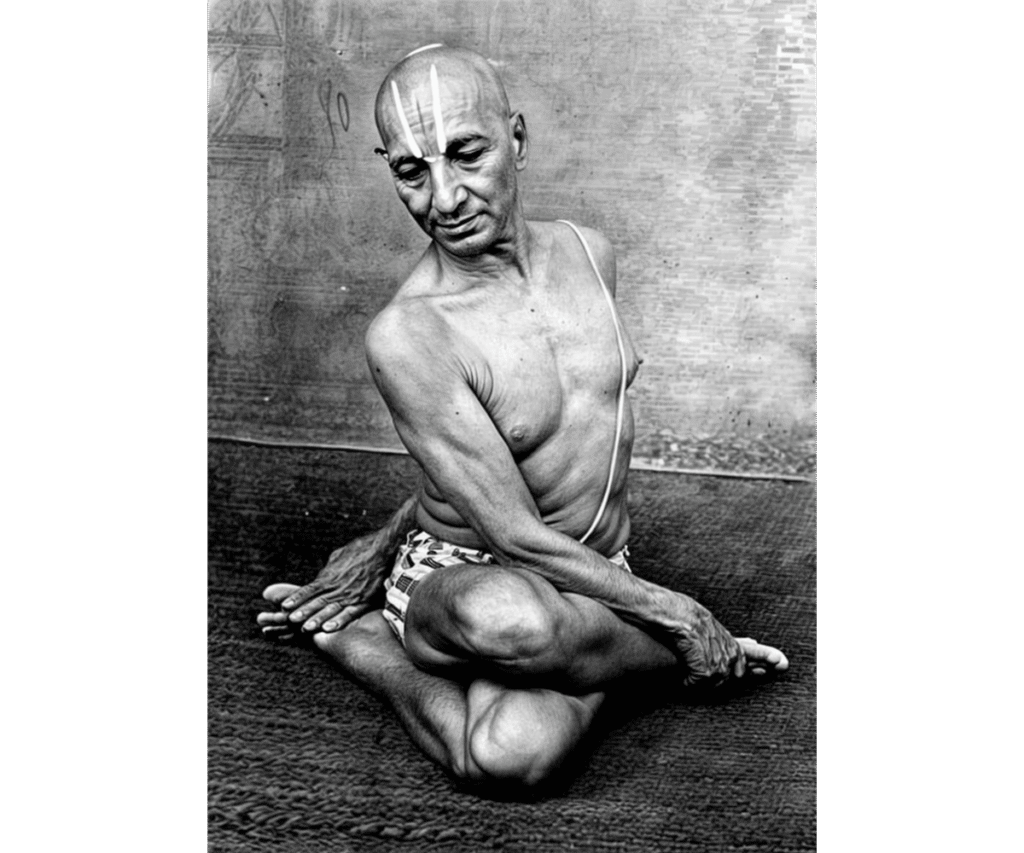
Sri Krishnamacharya himself warned of this back in 1934: “Foreigners steal away, either knowingly or unknowingly, many great works and techniques from our land, and then pretend to have discovered them by themselves. Thereafter, they bring these back here and sell them to us, who buy these things using the hard-earned money meant for running our families. If this goes on, they [foreigners] may even do the same thing to our Yoga techniques also. For all this, we can only say that the fault lies with us for not reading our Yoga-śāstra-s and bringing the techniques into practice. If we sleep further, a day may come when foreigners may become our teachers for Yoga practice also.”
— Sri T. Krishnamacharya, Yoga Makaranda (1934) If you’ve never read Yoga Makaranda, I highly recommend it.
Also, If you want a deeper breakdown of why the “yoga came from gymnastics” theory falls apart, check out this piece from Linda’s Yoga Journey. She lays it out clearly, and it’s worth the read.
Ancient Texts That Prove Yoga Postures Are Centuries Old
The claim that yoga postures are a modern European invention doesn’t hold up against the historical record:
Haṭha Yoga Pradīpikā (15th c.): Describes 15 foundational postures
Gheraṇḍa Saṁhitā (17th c.): Lists 32 asanas
Śiva Saṁhitā (14th–17th c.): Mentions 84 asanas
Yoga Yajñavalkya (ancient): Explores posture, breath, and meditative practice
Haṭhābhyāsapaddhati (18th c.): Hundreds of dynamic postures and sequences
Haṭha Ratnāvalī (17th c.): 84 asanas, with detailed descriptions
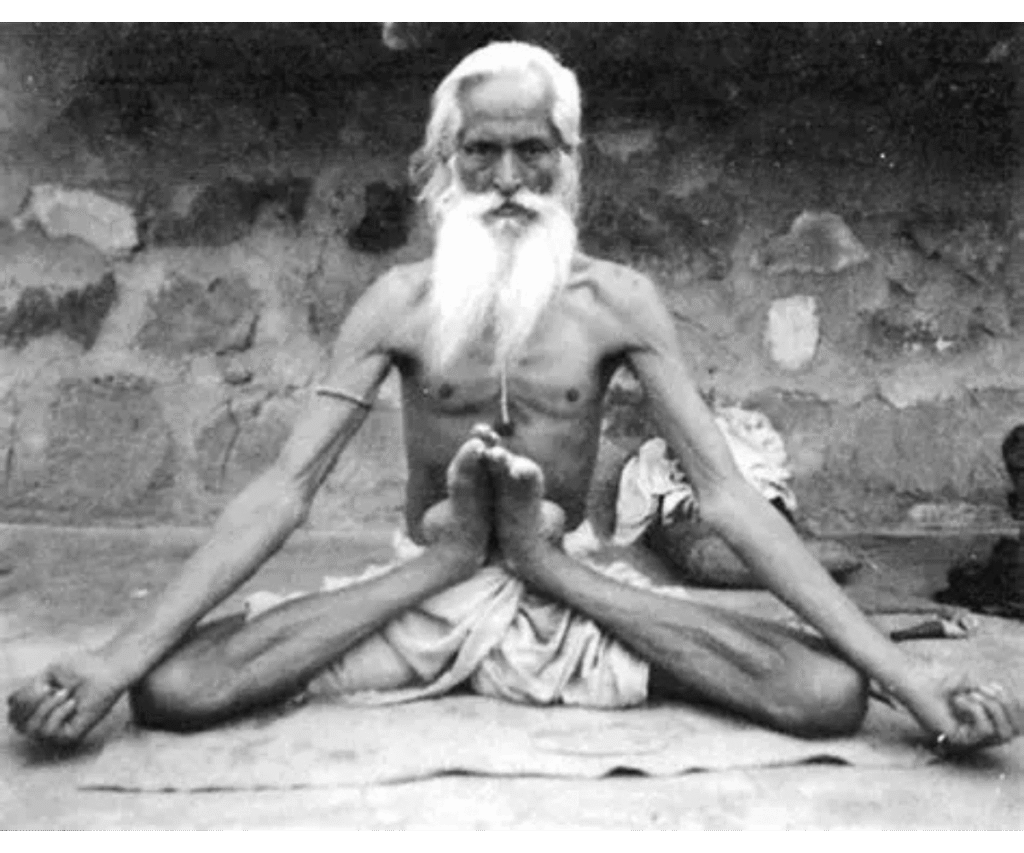
These are ancient, Indian, and deeply spiritual. Yoga postures didn’t come from Europe, they came from sadhus, seekers, and sages.
I’ll end this section with a line that sums it up best: “Yoga is India’s greatest legacy and most glorious gift to the world.”
That quote comes from the Press Information Bureau of India, and it says everything I’m trying to say in one sentence.
What’s Missing in Modern Yoga Teacher Trainings
Modern 200-hour yoga teacher trainings often rewrite or water down yogic teachings to fit Western comfort.
Examples:
Brahmacharya becomes vague “balance” instead of it’s true meaning of Walking in Brahman and celibacy
Tapas which means self-discipline might be thought of as only about physical postures
Ahimsa is often used as a shield for self-righteous political soapboxing, with no awareness that others may see the world differently or that true non-harming goes beyond just having “the right” opinions.
Many yoga teachers have never even heard of sadhana, a committed spiritual practice that’s foundational to yoga. Ask the average Western yoga teacher what sadhana means, and you might be surprised by the blank stares. Despite being one of the most essential concepts in the yogic tradition, sadhana is often barely mentioned in teacher trainings and then quickly forgotten in favor of sequencing flows or memorizing cues. But sadhana is the practice! It’s not just about what you teach, it’s how you live and we as teachers need this to properly pass the teachings onto the student from personal experience in our own practice.
Yoga’s True Purpose Is Spiritual
योगश्चित्तवृत्तिनिरोधः
“Yogaś citta-vṛtti-nirodhaḥ“
– Yoga Sutras 1:2
Yoga Sutras 1:2 clearly states what yoga is: Yoga is the cessation of the fluctuations of the mind.
Yoga is a spiritual practice rooted in Hinduism. To say otherwise is historical erasure, yet I’ve heard many Western teachers claim that yoga isn’t connected to any religion at all. You don’t have to convert to Hinduism to practice yoga but you do have to acknowledge where it comes from. Yoga isn’t rootless. And respect begins with truth.
Practicing with Integrity
I’m not here to preach, I’m still learning, and I’ve got a lifetime of learning ahead of me. But if we say that we practice yoga, we should want to understand what we’re actually practicing and put in the effort to go deeper. Yoga teaches us presence of mind, union, and truth. Let’s carry that into how we practice, how we teach, and how we show up for this path because the more we acknowledge where yoga comes from, the more powerful and transformative it becomes. ✌️
Related: What’s the Real Difference Between Nadi Shodhana and Anulom Vilom?
[fluentform id=”11″]
